
Ingredient spotlight: sprouts
Why we sprout moong, matki and kulthi, and what it does to a simple bowl of dal.
16 October 2026 · 2 min read
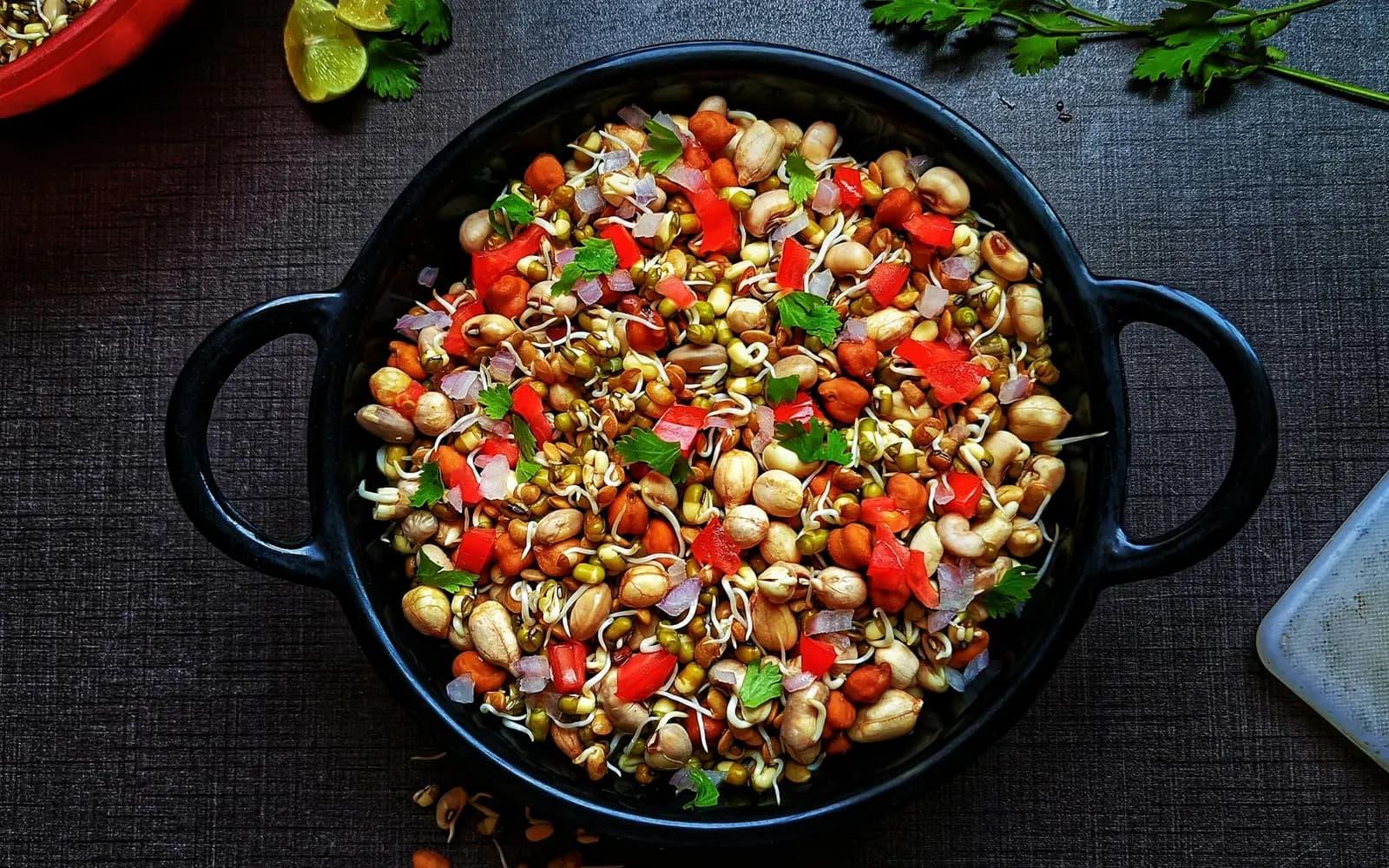
Sprouting is one of the oldest tricks in the Indian kitchen. Soak whole moong, matki (moth) or kulthi (horse gram) overnight, drain, and leave them covered for a day. A small tail appears, and the dry pulse turns into something fresh, crunchy and quick to eat.
What changes when a pulse sprouts
- Easier to digest. Many people find sprouts lighter on the stomach than the same pulse cooked as dal.
- Fresh crunch, no long cooking. Sprouts need only a light steam or a quick toss, so they keep their bite.
- Protein and fibre stay. You still get the pulse's protein and fibre, in a form that works as a snack, not just a side.
Why three kinds
Each sprout brings its own texture. Moong is soft and sweet, matki is small and nutty, and kulthi is firm with an earthy taste. Mixing them makes the bowl more interesting to eat – and gives a wider spread of nutrients than any one alone.
How we keep them fresh
Sprouts are best eaten the day they are ready. We sprout in small batches, keep them chilled, and add the lemon and chutney only when you order.
Try it
Mixed Sprouts Chaat – moong, matki and kulthi sprouts with peanuts, crunchy veggies, chutney and pomegranate.